Communication professionals are in the business of change. We design campaigns to understand perceptions and attitudes. At our best, we can contribute to shifting understanding, increasing awareness and influencing intentions.
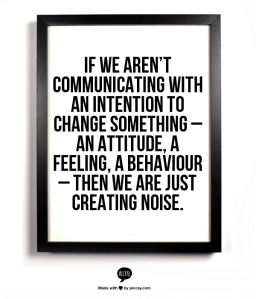
Intent is key for internal communication. We communicate to create change.
And yet, when it comes to the processes of managing change within organisations, the world of communication and the world of change can seem like different planets.
Short-term versus long term
PR – particularly when not in-house- is frequently a short-cycle activity. Communicators get in, understand a problem, an issue or a stance, manage our campaign, and then get out again.
Three years ago, I was facilitating a discussion with communication professionals about the differences between internal communication and external communication, and why specialists in the two fields don’t always see eye to eye. One very experienced practioner summed up the challenge well. At the risk of making broad generalisations, he indicated that external comms practitioners are adept at short cycle communication, deep diving into an issue as required, working with the news cycle and then moving on to the next issue. By contrast, he felt that internal communicators may be used to longer time scales for achieving changes in culture or engagement, looking holistically at the interdependencies and ongoing employee experience.
Historically that may have been correct, but communicators need to be agile when communicating change internally and externally. This means being adaptable and responsive to circumstances that may be constantly evolving. It requires communicators to be active agents of change.
Change agents and Change Agents
Organisational development and transformational change, process change, operational change management: each are different varieties of change that rely on different communication methods and approaches.
There is more to managing (most types of) change than communication alone. Understanding the key steps in the change management process, the different types of organisational change, and the key roles for leadership, communication, training and even HR, helps create the partnerships that lead to effective change.
We explored these ideas and more in the PRIA webinar, The Business of Change, The Art of Communication on 14 November. PRIA members will ion be able to access the webinar recording, and the slideshare is available.
In the session, we defined and aligned approaches to change communication for in-house practitioners working on major projects, PR and comms professionals who are part of an agency response to change, or even managing changes in your own business.



 Meaning Business