Sensemaking takes many forms.

How stories are told around the world
Sensemaking takes many forms.
Sensemaking takes many forms.

I once worked in an ASX 25 company where despite there being more women than men in the workforce, only one person in the ‘top 200’ senior manager group was female. Such a chronic lack of diversity changes the quality of communication, collaboration and leadership within a corporate culture.
Similarly, within the communication professions there are a higher number of women in internal and organisational communication roles (although senior roles as disproportionately held by males, as is the focus of research by IABC and Global Alliance). Too often, the biggest issue named by communicators is ‘getting heard’ by management.
At the risk of mansplaining – here are some ways communicators can ensure their voice is heard.

Leadership Communication: It’s not what you want to say, it’s what you want to happen
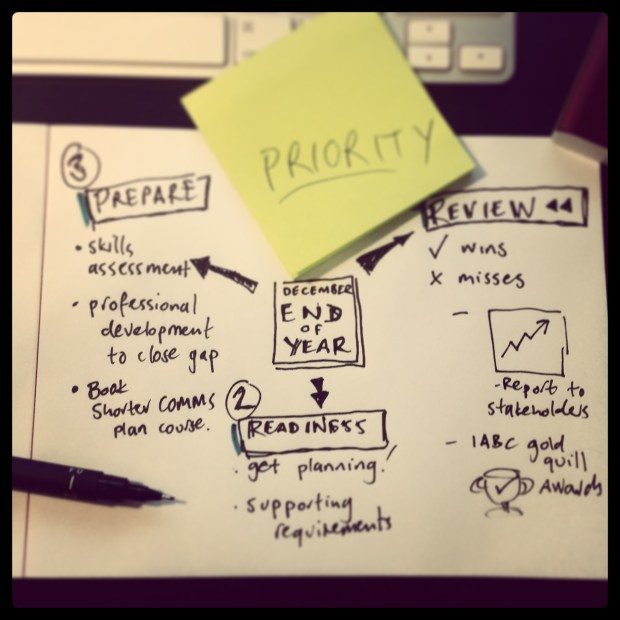
How many times have you heard “I can’t believe it is December already!” from colleagues or family lately?
The end of the calendar year provokes responses ranging from shock at the speed of time passing, through to satisfaction at the achievements of the year, to mild panic as people look to their plans for 2014 and realise what is missing.
For communicators, December is a time to be able to reflect on the achievements of the waning year, while setting up for success in 2015.
The pace of change in organisations requires us to be adaptive. Plans change, often. Focus on tools and processes that enable flexibility, that are simple to use. Using a common approach across your organisation builds skill and consistency. The Shorter COMMS Plan is a simple methodology to support better outcomes from all types of communication; whether small projects, business planning or team management. A new one-day workshop designed to help apply the Shorter COMMS Plan is being held in Sydney on 4 February.
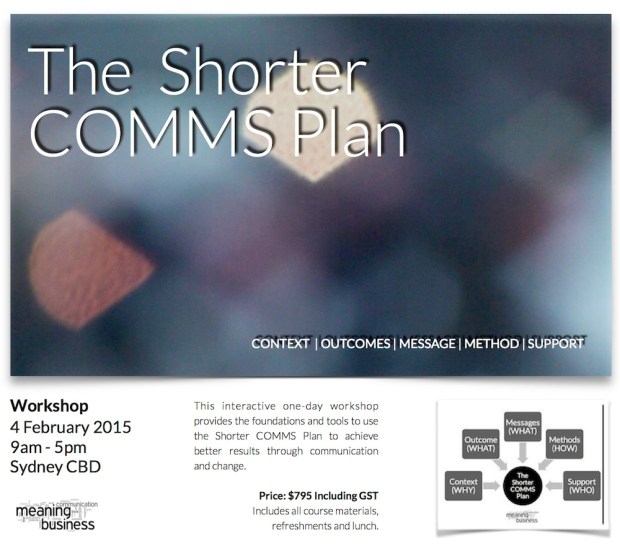
New Workshop to apply the Shorter COMMS Plan is now available.
* Disclosure: I am Co-Chair of the Gold Quill Blue Ribbon Panel for Asia Pacific.
 Meaning Business