
Most communication fails before it starts.
Wrong context. Unclear outcomes. Leading with tactics. Too much noise, not enough signal. Sound familiar?
The COMMS Plan is a five-step process for asking the right questions — before you communicate.
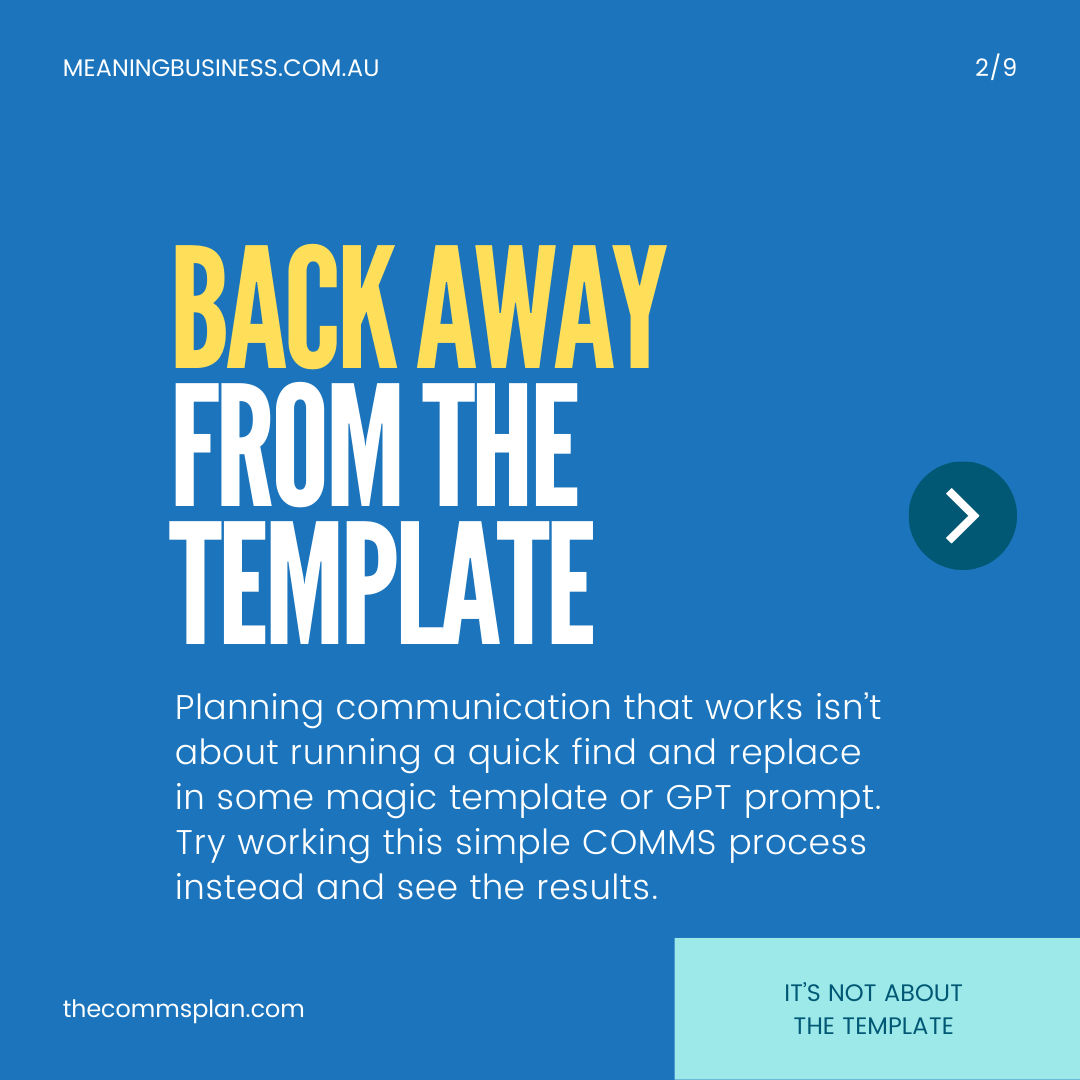
Not a template. A process. The difference matters.
The secret is in the sequence
Communication planning goes wrong when we start in the wrong place. We reach for tactics — the email, the town hall, the campaign — before we’ve understood what we’re trying to achieve, or who we’re trying to reach, or what actually needs to change.
COMMS works because it forces the sequence.
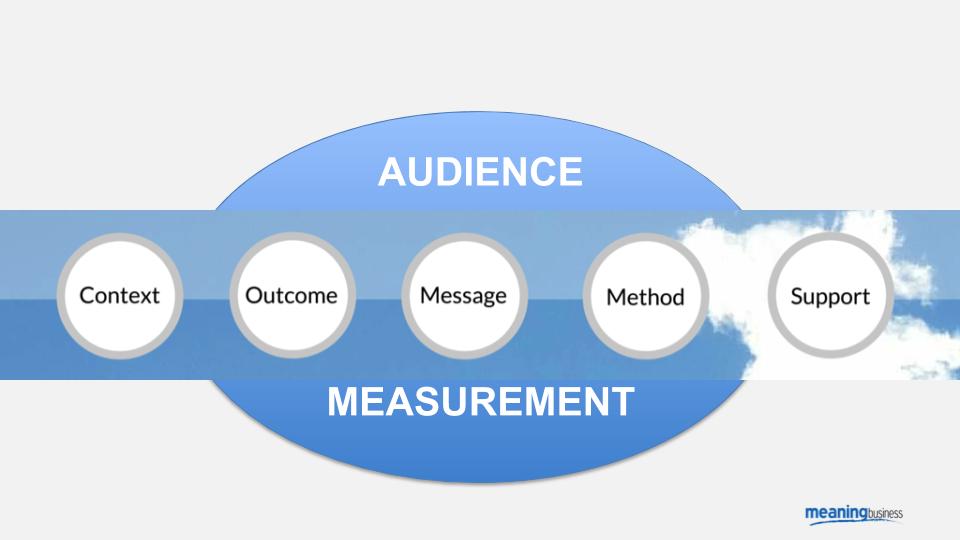
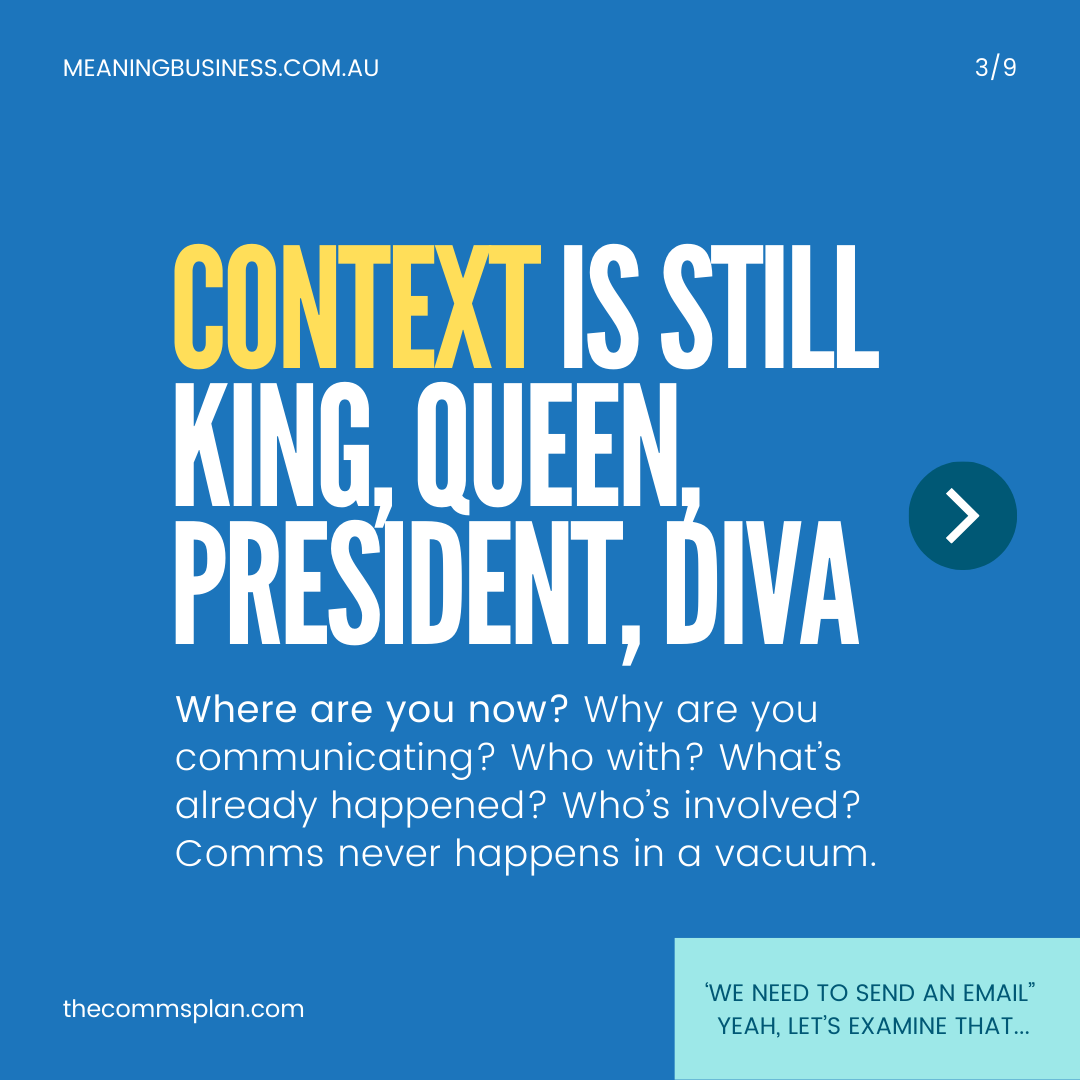
Context — What’s going on here? Why now?
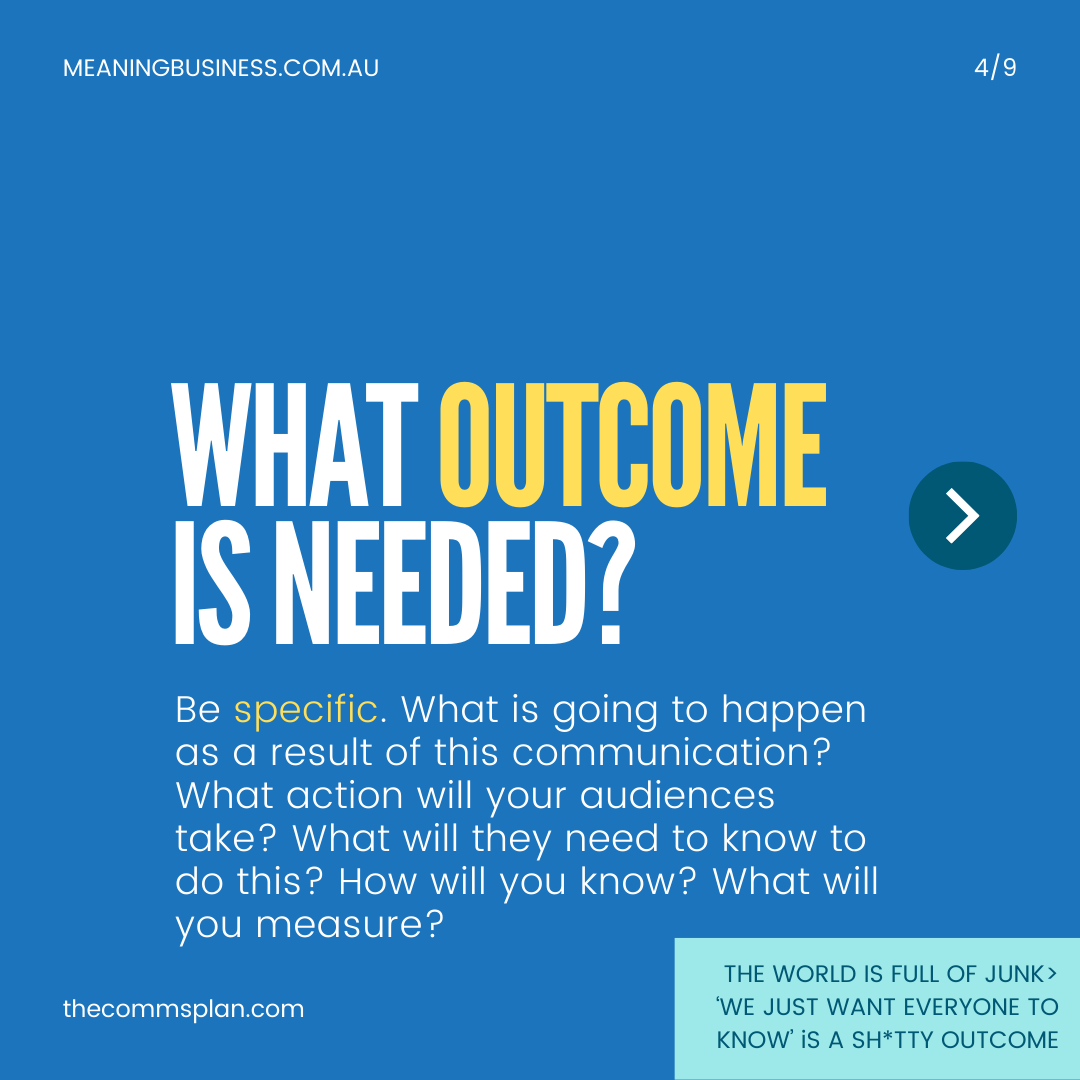
Outcomes — What are we trying to achieve? What needs to shift — for every audience?
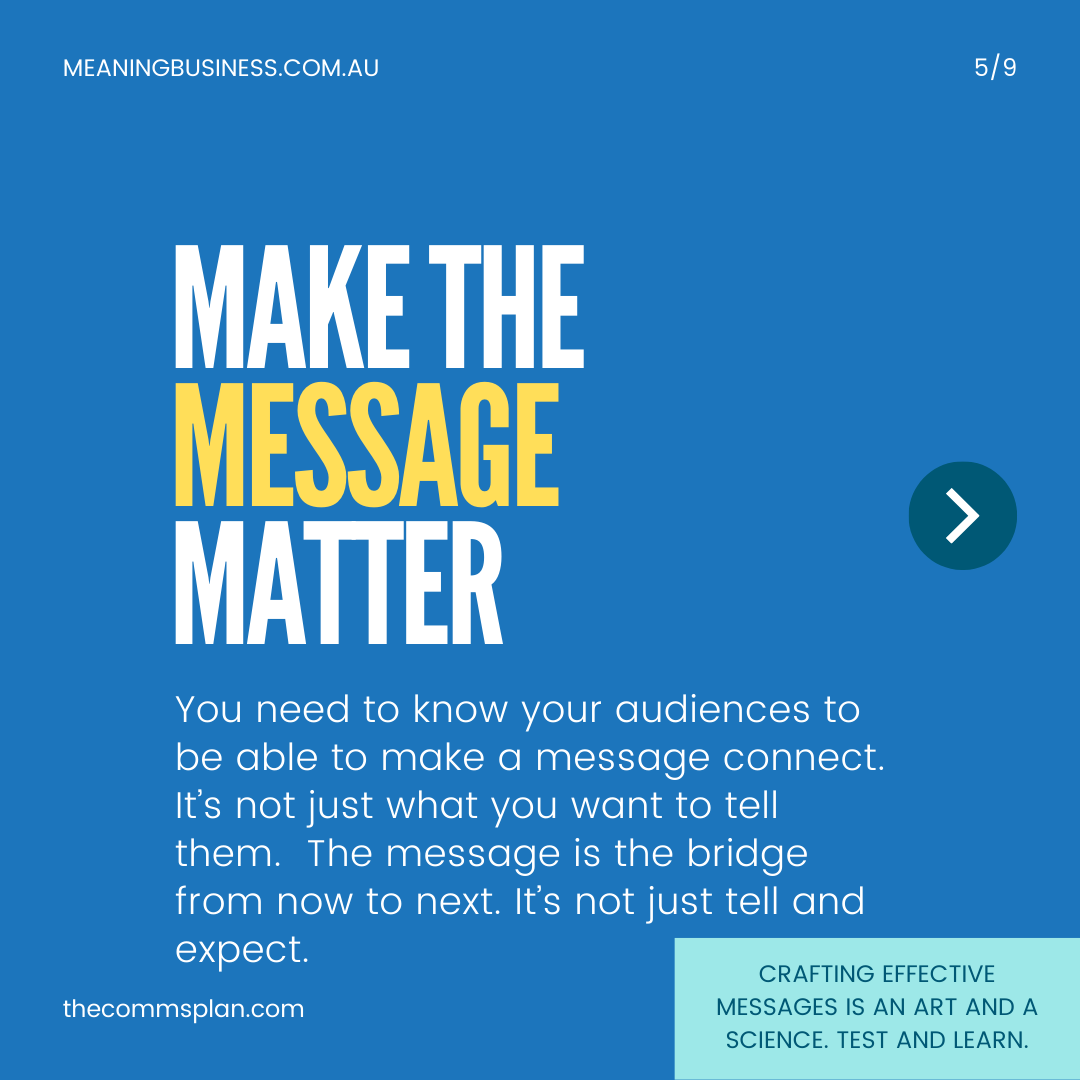
Message — What do we need to say? And what do we need to hear?
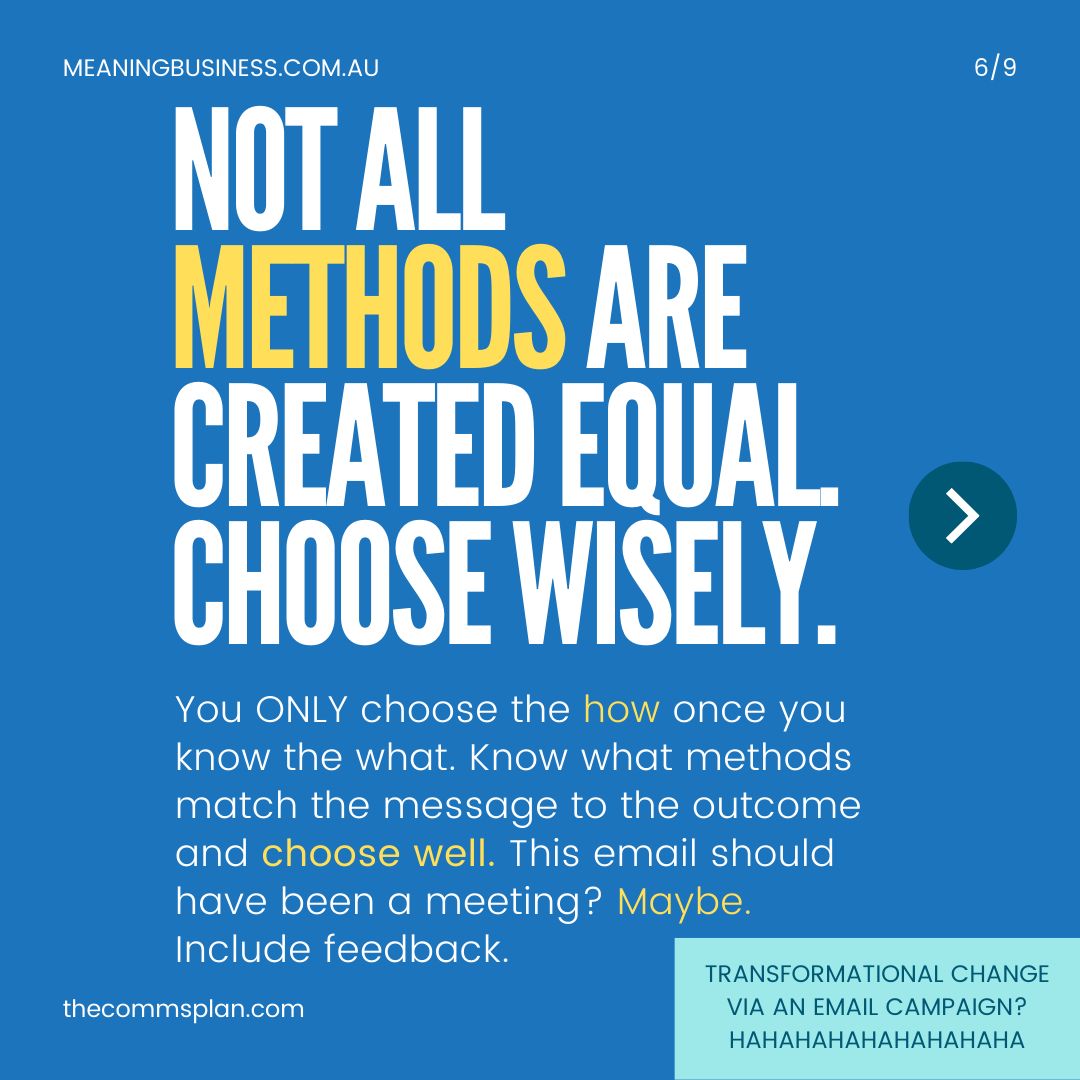
Method — What’s the best way to communicate this — and should we communicate at all?
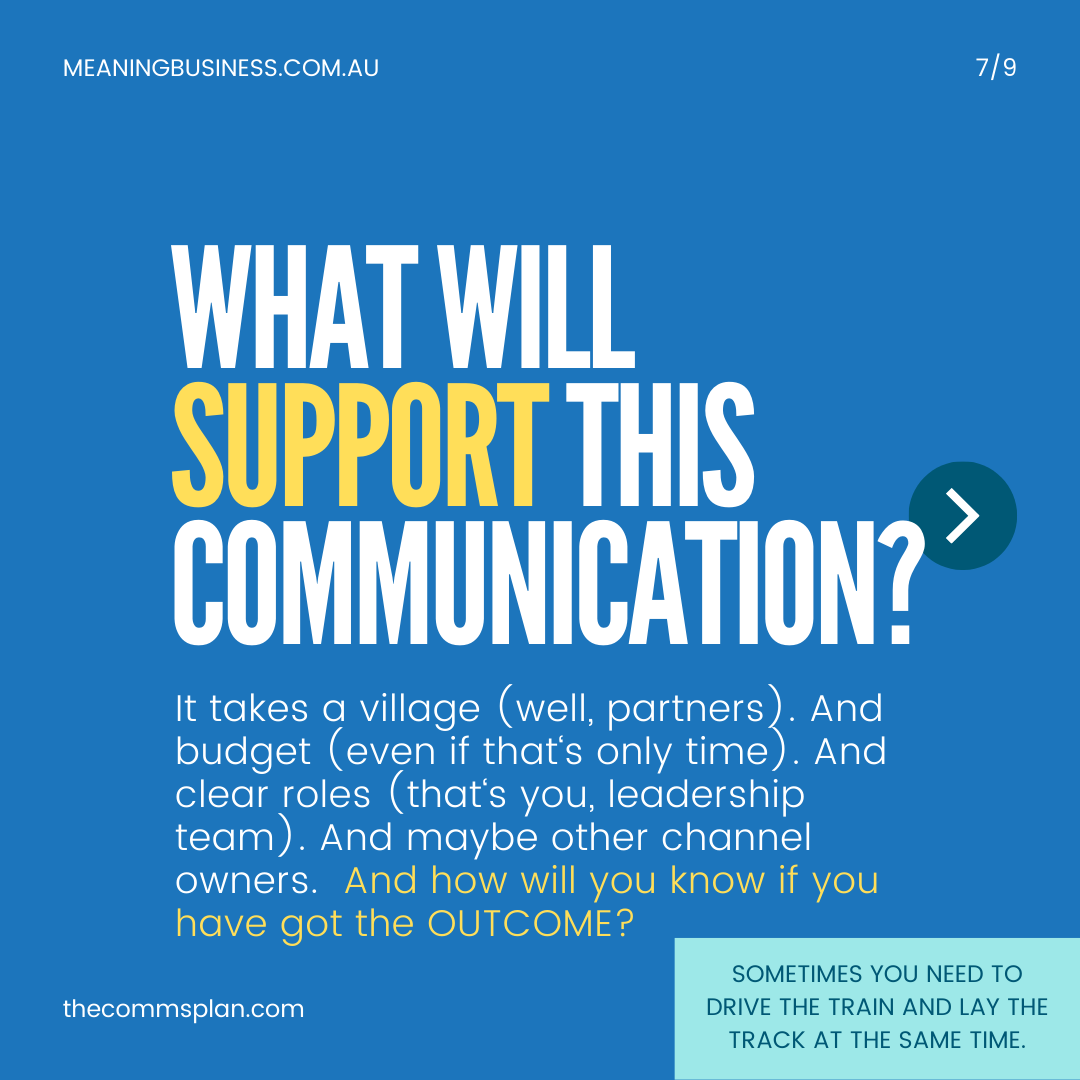
Support — What’s required for this to succeed?
Audience and measurement aren’t separate steps. They’re embedded in every one.
Isn’t this just common sense?
Yes.
That’s the point. The COMMS Plan is not a proprietary framework that requires a consultant to unlock. It’s a structured approach to questions that good communicators already ask intuitively — made explicit, repeatable, and teachable.
For communication professionals, it provides a common language for planning conversations with business partners.
For managers and leaders, it’s a discipline for thinking before sending.
For project teams, it’s a line-of-sight tool that connects communication activity to the outcomes the business actually needs.
Simple enough to be used in a one-to-one conversation. Scalable enough to underpin an organisation-wide communication strategy.
What changes when you use it?
The conversation shifts. Instead of starting with “what channel should we use?”, it starts with “what outcome do we need?” That’s not a small thing. It’s the difference between communication that creates noise and communication that creates change.
Organisations that embed COMMS as a common approach find that it takes the mystery out of communication planning — for communicators and non-communicators alike. When everyone is asking the same five questions, alignment follows.
Who uses the COMMS Plan?
And why does it work for them?
The COMMS Plan works across roles because the problem it solves is universal: communication that doesn’t connect to outcomes. But the way that problem shows up is different depending on where you sit.
Communication professionals
You already know how to plan. The COMMS Plan gives you a common language — a process you can walk a business partner through, explain to a leader, or hand to a subject matter expert without losing the rigour. It shifts the conversation from “what channel?” to “what outcome?” before the brief even starts. For teams building organisational capability, it’s a framework that travels.
HR and People & Culture teams
You communicate constantly — about change, about policy, about people programs — but communication planning often isn’t your primary expertise. The COMMS Plan gives HR and P&C professionals a structured approach that doesn’t require a communication background to use. It’s particularly effective for change communication: defining what employees need to know, understand and do, before deciding how to tell them.
Leaders and managers
Most of the communication that matters in organisations happens at the team level — and most managers are doing it without a plan. The COMMS Plan works as a discipline for thinking before sending: is this the right message, for this audience, at this moment? Is a team meeting the right method — or a conversation? It takes minutes to apply. The alternative — the reactive, tactical, noise-generating approach — takes much longer to clean up.
Project and change teams
Project communication often starts with a Gantt chart and a set of deliverables. The COMMS Plan provides the line-of-sight that sits behind the schedule: what outcome does each communication need to achieve, for which audience, at which stage of the change? Used alongside methodologies like Prosci, it keeps communication focused on adoption rather than activity.
Enabling functions and subject matter experts
Finance. Legal. IT. Operations. Risk. If you work in a function that needs to communicate — and every function does — but don’t have a dedicated communication resource to call on, the COMMS Plan gives you a structured approach you can apply yourself. It doesn’t replace specialist communication expertise, but it gets you asking the right questions before you start, which is more than most templates do.
Executive teams
Strategy is only as good as the communication that translates it. Executive teams use the COMMS Plan to build clarity and consistency across leadership — ensuring that what gets communicated at the top connects to what employees need to understand and do at the team level. The process also makes communication decisions visible and defensible, which matters when resources are limited.
When can you use it?
The short answer: whenever communication is involved.
Team meetings. Coaching conversations. Project updates. Change announcements. Social media planning. Business planning. Strategic reviews. One-to-one conversations with a manager.
The COMMS Plan scales to the situation. The questions stay the same.
What people say about the COMMS Plan
“I love the simplicity of the five-step COMMS system. It is a great tool for educating business leaders about the communication process.”
“A simple yet powerful approach. It has helped me to work on many aspects I had overlooked earlier.”
The method has been featured in IABC’s Catalyst, referenced by All Things IC, Happeo, and Alive With Ideas, and presented in two IABC webinars. It aligns with the IABC Global Standard for professional communication and with change methodologies including Prosci.
Learn more or work with me
The COMMS Plan is available as a public workshop, an in-house program, and a self-directed course. I also use it as the foundation for coaching and mentoring sessions with communication professionals at every stage of their career.
If you want to explore what COMMS could do for your team or your own practice, get in touch.
The Shorter COMMS Plan v2.2 by Jonathan Champ, Meaning Business is licensed under Creative Commons Attribution-ShareAlike 4.0.


Workshops using the COMMS approach
There are three core COMMS approach workshops available, or we can develop bespoke workshops using the approach.
To discuss bringing COMMS Plan workshops to your organisation please get in touch.


8 comments
Comments are closed.